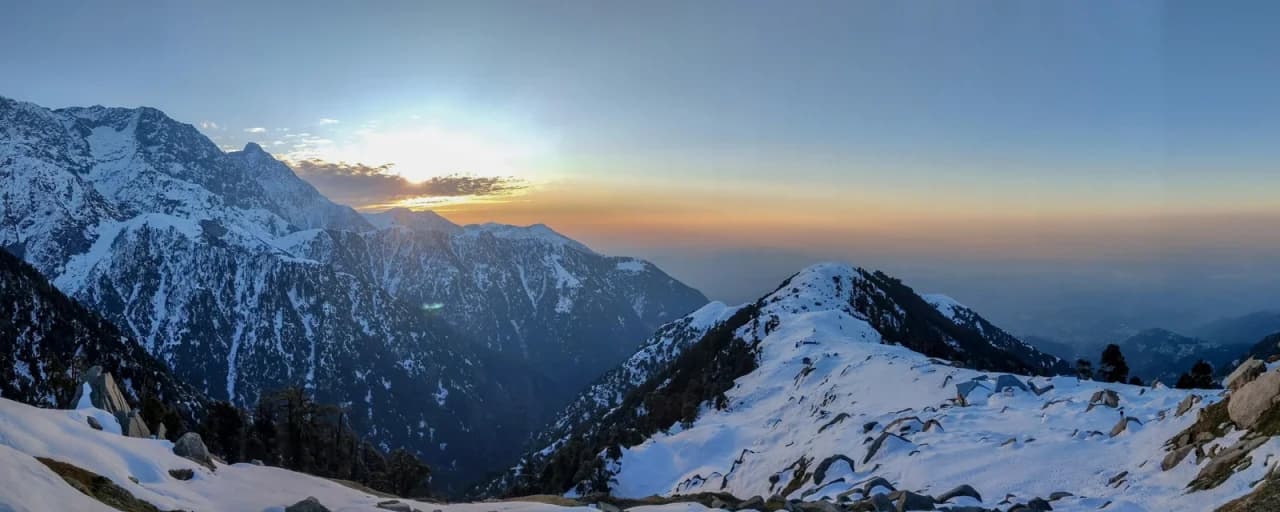
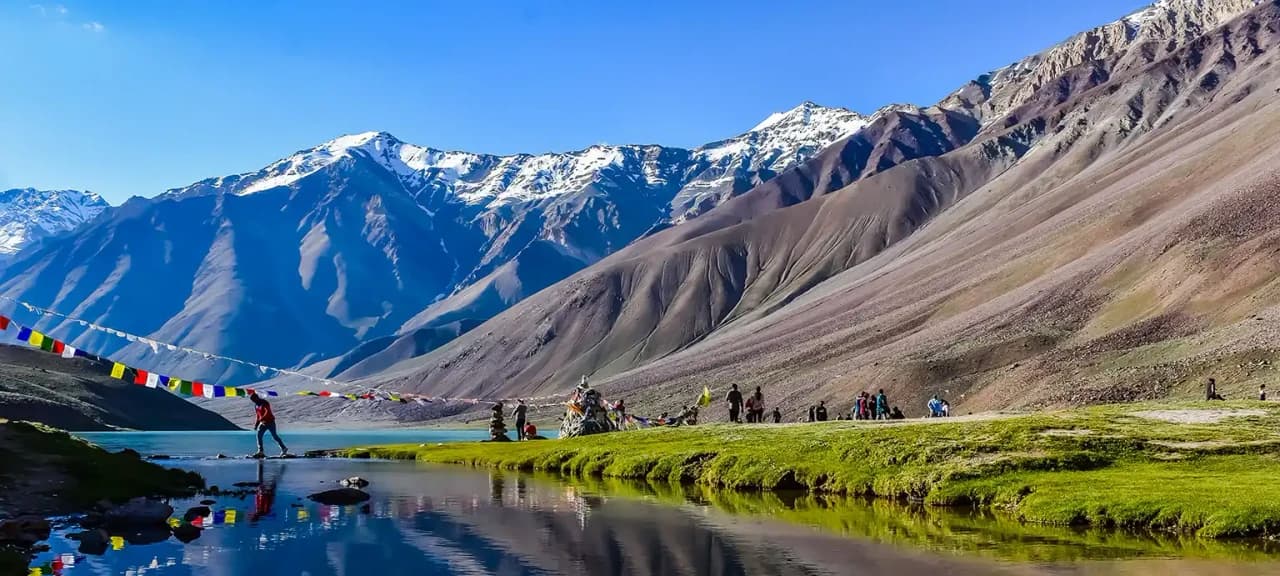
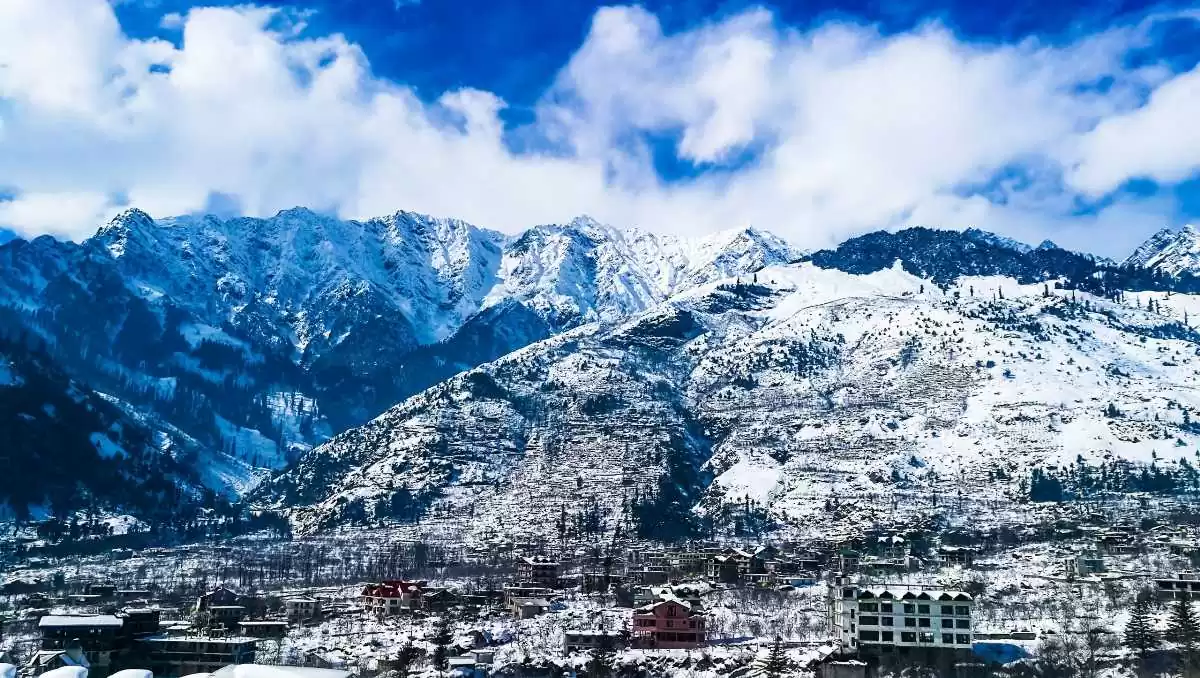
handertal, meaning 'Moon Lake' in Hindi, sits at 4,300 meters (14,100 feet) in the Lahaul-Spiti district of Himachal Pradesh, cradled in a barren, otherworldly bowl of scree and ancient moraines. This crescent-shaped lake — the shape from which it derives its evocative name — is one of the Himalayas' most visually arresting bodies of water: a jewel of impossible emerald and turquoise that shifts color with the angle of sunlight, the depth of cloud shadow, and the hour of day, cycling through shades from deep sapphire at noon to molten gold at sunrise. The lake sits at the convergence of two high-altitude travel routes — the Hampta Pass trek from Manali on one side and the Spiti Valley road from Kaza on the other — making it accessible to both trekkers who have earned it through days of difficult walking and road travelers who reach the nearby campsite by jeep. But accessibility alone doesn't diminish its magic: standing at Chandertal's edge, surrounded by the raw, silent immensity of the Spiti cold desert with 6,000-meter peaks reflected in still water, you feel the full weight of the Himalayan landscape pressing down upon you with its ancient, indifferent magnificence. Chandertal is among the few places in India where the natural world overwhelms the human with complete, uncomplicated authority.
The Lake's Ecology and Geographical Setting
Chandertal Lake was formed by glacial activity during the last ice age, when a glacier scooped out the depression that now holds the lake's brilliantly colored water. The lake has no visible inlet stream — its water comes primarily from snowmelt percolating through moraines — and a single small outlet stream that drains into the Chandra River. This hydrological isolation, combined with the cold desert's extreme UV radiation, contributes to the lake's extraordinarily clear, deeply colored water. The surrounding landscape is classic cold desert — sparse vegetation dominated by cushion plants, sedges, and a few hardy grasses that have adapted to extreme cold, high UV radiation, and minimal precipitation. In contrast to the lush meadows of the Kullu Valley visible from the Hampta Pass, Chandertal's setting is stark and lunar, justifying the 'Moon Lake' designation. The lake sits in Lahaul-Spiti district, which falls within a protected area, and the government has established regulations limiting camping and visitor numbers to preserve its fragile ecology. The lake is designated as a Ramsar Wetland of International Importance, recognizing its significance as habitat for migratory birds including Bar-headed Geese, Brahminy Ducks, and various waders that use it as a resting point during their trans-Himalayan migrations.

How to Reach Chandertal
Chandertal is accessible via two primary routes, each offering a completely different experience of arrival. The overland route from Spiti Valley approaches via Kunzum Pass (4,590m) from Kaza, or alternatively from the Manali side after crossing Rohtang Pass. A rough jeep track runs from the Manali-Kaza highway down to a campsite approximately 1 kilometer from the lake, where vehicles must stop. From the campsite, a short 15-20 minute walk across flat, rocky terrain brings you to the lake's edge. This makes Chandertal one of the few high-altitude Himalayan lakes accessible without significant trekking, though the road itself is an adventure — unpaved, narrow, and subject to washouts. The second approach is via the Hampta Pass Trek, where Chandertal serves as the final major highlight before trekkers descend to Chatru and return to Manali. This approach, earned through 4-5 days of demanding high-altitude trekking, generates a depth of emotional response that road travelers rarely experience — the lake appears after the physical and psychological journey of crossing the pass, and its beauty hits with corresponding force. For this reason, many experienced trekkers recommend the Hampta Pass route specifically for the Chandertal experience, arguing that difficulty of access is inseparable from quality of experience at high-altitude destinations.
Camping at Chandertal: Under Himalayan Stars
The campsite near Chandertal Lake — officially at Tokpo Yongma, approximately 1 km from the lake — is one of India's premier high-altitude camping destinations. At 4,300 meters with minimal light pollution and the lake and mountains as your immediate neighbors, the night sky here is extraordinary. The Milky Way's central bulge is clearly visible; Jupiter's moons are distinguishable through binoculars; shooting stars cross the sky with almost casual frequency during summer months. Camping operators set up tents here from June through September, providing sleeping bags, mattresses, and meals (typically simple but warming — Maggi, rice, dal, chai). Sunrise at Chandertal is arguably its most photographically spectacular moment: the first golden light touches the surrounding peaks while the lake remains in shadow, then gradually reaches the water's surface, triggering a color transformation from pre-dawn grey-blue through lavender, pink, and finally into the deep emerald-turquoise of full daylight. Temperature drops to -5°C or lower at night even in July, making quality sleeping equipment essential. The high altitude means that simple activities like walking to the toilet tent at 3 AM — when the stars are overwhelming and the silence absolute — become unexpectedly profound experiences.

Photography at Chandertal: Nature's Perfect Frame
Chandertal Lake is, without question, one of India's premier landscape photography destinations. The combination of intensely colored water, barren snow-streaked mountains, vast unobstructed sky, and reflections of clouds and peaks in the lake's still surface creates compositions that require minimal photographic skill to be stunning. The challenge at Chandertal is not finding subjects but choosing between them. Sunrise photography is the most rewarding — the light quality in the hour after sunrise at high altitude is extraordinary, with the low angle creating rich shadows in the surrounding moraines and warm light on peak faces reflected in still water. During the day, cloud movements create constantly shifting light and shadow across the landscape, with dramatic possibilities when storm cells build over surrounding peaks. Evening photography captures the warm alpenglow on mountains after the sun drops below the horizon — a 15-30 minute window of soft pink and purple light that renders the landscape almost impossibly beautiful. Wildlife photography opportunities include Bar-headed Geese, Brahminy Ducks, and occasionally Snow Pigeons. Technical considerations include carrying a UV filter (extreme UV at altitude causes haze and potential sensor damage), extra batteries (cold temperatures drain batteries rapidly), and a sturdy tripod for the long-exposure night photography that Chandertal's darkness enables.
Best Time to Visit and Regulations
Chandertal is accessible from approximately June 1 to early October, when the Kunzum Pass and Rohtang Pass roads are open. June sees the lake partially surrounded by snow with the road sometimes requiring a 4WD vehicle. July and August are peak months with maximum visitor numbers, most stable camping, and the warmest temperatures (though still cold at night). September offers fewer visitors, clearer skies, and the early autumn transformation of whatever sparse vegetation exists into gold and rust tones. October is the last window before the passes close under winter snow — fewer operators are camping, temperatures are dropping fast, and there's increasing chance of early snowfall. The lake's Ramsar wetland status means regulations are in place: camping is restricted to the designated campsite (not lakeside), fires are prohibited (only gas stoves allowed), and all waste must be carried out. Forest department permits may be required and are available from checkposts on the approach road. These regulations are not merely bureaucratic inconveniences but genuine protections for a fragile ecosystem — please follow them strictly, as they are the only thing standing between Chandertal's current pristine state and the degradation that has afflicted many of India's more accessible natural wonders.
“
"Chandertal doesn't just reflect the sky — it holds a piece of it permanently, a blue so deep and true that it makes you wonder if the lake has captured something the sky lost long ago."
— Landscape Photographer, 2024
Key Takeaways
Practical Tips
Acclimatize for at least 2 days at Kaza or Manali before visiting Chandertal
Carry a sleeping bag rated to -10°C — temperatures are extreme at night
Book camping spots in advance for July-August peak season
Carry all your waste back — the lake's protected status must be respected
Visit at sunrise for the most spectacular photography and fewer crowds
Carry extra batteries for cameras — cold temperatures drain them rapidly
Wear UV-protective sunglasses and apply sunscreen — UV radiation is extreme
Carry drinking water or purification tablets — no clean water sources at campsite
Maintain silence near the lake's bird nesting areas
Bring warm base layers, insulated mid-layer, and wind-proof outer jacket
Don't camp directly at lakeside — use only the designated campsite
Allow 2-3 hours simply sitting at the lake — don't rush this experience
12 tips to help you on your journey
Chandertal earns its place among India's most extraordinary natural destinations through a combination of visual perfection and existential impact that few landscapes achieve. The moon-shaped lake at 4,300 meters, with its color-shifting waters and barren, majestic surround, is the kind of place that photographs beautifully but must be experienced physically to be truly understood — the thin air, the silence, the cold, the vastness, and the humbling sense of complete human insignificance before ancient mountain time all contribute to an impact that images cannot capture. Whether you arrive via jeep track or on foot after crossing Hampta Pass, whether you camp for one night or linger for several, Chandertal will mark you. The memory of its colors — that specific, unrepeatable turquoise-emerald — will surface unexpectedly in ordinary life, a reminder that somewhere at 14,100 feet, a crescent-shaped lake holds a piece of the sky and waits, unchanged by seasons and unconcerned by human admiration, for the next visitor willing to make the journey.
Aman Verma
AuthorNature photographer and high-altitude lake specialist who has documented over 40 Himalayan alpine lakes. Follow along for more travel stories, photography tips, and destination guides from around the world.